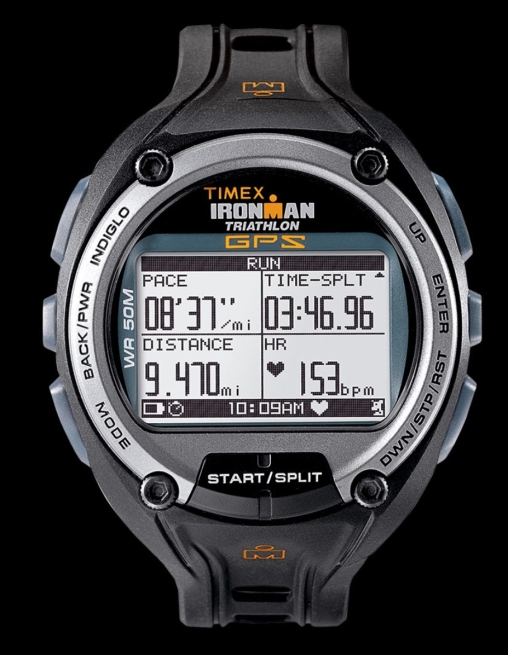
I originally penned a post about how THE Ironman experience related to leadership for me in August 2012! At this point in time (Janaury 2020) I'm updating and reprising my musings on this comparative based on the fact that I'm back for another bite of the pain, suffering, and glory that is the Ironman Canada triathlon. It will have been 9 years since I last took on the challenge so we are definitely going to see what I have learned - and can apply - since the last effort!
It's certainly cliche to identify that many leaders look to and experiment with a variety of initiatives designed to improve the performance of their organizations. Paradoxically, however, the majority of these efforts often fail and can be traced back to the quality of leadership at their helm. We squander our potential and the potential of our people from not focusing more strongly on self awareness and self development. So what can the experience of preparing for and competing in an Ironman competition tell us about leadership? Well here are my thoughts.
I've competed in the big Ironman Canada event in 2010 and 2011 and I'm going back in August 2020 - 9 years removed between competitions. I've done other running events since then - the Goofy and Dopey races in Disney World, the Berlin Marathon, the Venice Marathon and a few others. But nothing is going to compare to reprising the event - and the preparation - of Ironman. And in some respects I begin almost from where I started in 2009 getting ready for the 2010 Ironman - trying to establish a training foundation (e.g., relearning how to bike, swim and maybe run), trying to get into a proper race weight zone (as of Christmas 2019 was at 204 pounds and as of writing at 192), get re-geared with tune-up of bike and purchase of new bike computer.
But it's also going to be somewhat tougher this year than in the past. In 2010 my family was smaller and perhaps a bit more manageable. My wife was coming off of her own history of several years of triathlon experience. I was employed rather than running my own business which meant paid vacation time and perhaps (ironically?) greater control over time and workout time. And, of course, I'm now 55 years of age versus 45 years of age!

Interestingly enough, from the standpoint of being an executive coach, through much of 2011 and into 2012 I had the privilege of working with an executive coach. At that time, my coach helped lead me through some challenging times and a major transition in my career. Aside from all the skills and talents you would expect to see in an executive coach, he also brought another dimension to our conversations - he was and is an accomplished triathlete and has competed at Ironman Canada. This shared experience allowed us to make many comparisons to my work environment and Ironman. It allowed me to put into perspective aspects of my work that I did control and those that I did not. As I prepared for 2010 and 2011 - and as I now prepare for 2020 - versions of Ironman Canada I thought I would share with you some of the analogies I've been able to draw between Ironman and Leadership - and throw in a few more that grew from our work together - and from my life and business experience since then.
First, there has to be some motivation or goal in mind to undertake an Ironman event - as there must be in taking on a leadership role. As "they" say , without a goal any direction will do! Ironman is a daunting undertaking - 3.8 km swim, followed by 180 km on the bike, followed by a 42 km marathon. As I'm sure most amateur athletes would attest to there are not a lot of positives that come with doing this event. You certainly get cheers along the way from family and friends, and sometimes from complete strangers. You do get a finisher's medal at the end of the race (no podium finish for me!).
And you get to feel a tremendous sense of accomplishment (and relief!) when you cross that finish line.
Otherwise it's a lot of hard slogging through the three disciplines and sometimes a lot of talking to yourself as you try to reach the finish line. You are in the race in some cases just to say you did it, to prove to yourself that you are capable. And most of us in leadership roles would agree that recognition is outweighed by ongoing challenges. Like Ironman, it's often a lonely journey we take on.
Related to this motivation and goal setting, the intervening years in business have also taught me the powerful role that experience and specificity of goals can play in one's success. In each year of my business I have updated, on at least an annual basis, my goals for the year. In that process, and as I have coached and worked with my clients, I have come to appreciate how many of the barriers we believe we face are actually self-created. If we create stretch goals - that are specific and challenging - we can often surprise ourselves with our success. That success then encourages further "audacity" in setting the next impossible goal. So in Ironman that has meant that simply achieving a new personal best is not enough. I want to - and am working towards - trying to better my last, best time by 10%. Perhaps that still seems like a small goal to you. For me it means ramping up performance in each element of the race. Same philosophy applies to my business which, since 2012, has grown by nearly 400% as measured by gross revenue. Success, courage, determination, realism and purposeful action has continued to lay the foundation for better results.

Second, for best results in an Ironman, you spend a significant amount of time in training and preparing for the race. No different than getting ready to take on a leadership role. For Ironman, you can find yourself starting to prep as early as a
few weeks after the last race for the next race! Granted your training isn't as intense at this point. Rather, you are now trying to maintain your level of fitness, work on improving or sustaining technique, improving core strength and (if you are like me) looking to shed a few more pounds. Entering race day - or starting a leadership position - without any form of preparation is a high risk proposition to say the least! For most of us - including the professionals - success does not come without months of preparation. Others may spend years getting ready for the ultimate event, building up confidence to take up the challenge by doing shorter distance triathlons. In much the same way, successful leaders prepare themselves academically, take on smaller challenges, and ultimately work up to larger leadership roles.
Triathlon is a multi-discipline sport. So is leadership. However, if we think of triathlon as swimming, cycling and running we would miss out on other equally important components. A critical part of training and race day preparation is making sure your nutrition and hydration is race ready. Throughout the year leading up to Ironman you use training days and smaller events to figure out what works for you and will keep you fueled for the race - what will your body tolerate? what amount do you need to sustain race pace? what kind of electrolyte replacement do you need? do you need to use salt replacement? how will that change depending on weather conditions? So what's the leadership analogy for nutrition? My take on that is all leaders need to continue to fuel their minds through continuous education and learning. You can't continue to make positive impact if you don't continue to hone and advance your skill set. There is too much change too fast in our work world - labour force dynamics, regulations, government direction, world events and upheaval - to stand pat with existing learning. Leaders must continue to fuel their minds.
AND...just like nutrition and hydration, the form of your learning and development has to be customized to your needs and appetite. What works for one athlete/leader may not work at all for the next. Know yourself first and best. Take advice, information and learning from others. Create your own best solution within the context of your own personal goals and expectations.

Success in Ironman also requires that your equipment - wetsuit, bike, shoes, watch - is race ready. This means making decisions early on as to whether you want to take
on the race with a road bike or a tri-bike, whether you want to go with base components or invest in top-of-the line products, what type of running shoes work for you and so on. You'll also find that your training and smaller races will take their toll on your equipment. At points in time you will have to replace your shoes as you put on the miles, replace your tires and otherwise tune your equipment in the hopes of not having a breakdown on race day. In much the same way, as a leader, you have to make the appropriate investments in equipment and tools to undertake your leadership task - do you have the right measurement systems in place, the right tools to effectively communicate with your stakeholders, the right mechanisms to ensure that your work group or organization is aligned towards the achievement of a common goal. Your experience will cause you to change/upgrade your tools as you work towards your goal.
I can't do justice to the comparison between Ironman and Leadership if I don't discuss mental preparation and hardening. You can have everything in place mentioned above - training in several disciplines, fueling plan nailed, equipment ready - but if you are not mentally prepared for race day all of the prep work might be - will be - for nought. In this way, "failure" during training or in a shorter race may become the best guarantee of future success at Ironman. If you don't face adversity, large or small, prior to Ironman - flat tire, slipped bike chain, bad weather - you likely won't know how to react when something like that happens on race day. And you don't want to be doing all your learning on race day! It's no different with leadership. The best leaders have faced their share of adversity on their way up to their current roles - they've experienced conflict, they've had to make tough choices, they've had to balance multiple priorities and tasks, and they have sometimes failed. However, that's what has (hopefully) helped them to become better leaders.

Then it's race day. All your preparation has led to this moment. In 2011, that meant nearly 3,000 people entering the water at the same time. Each one with their own anxieties, skill level, and goals. Some were rookies. Some had done this more than a dozen times. Regardless, for the next nine, ten, twelve or even seventeen hours you effectively begin to race on your own, trying to beat the clock. At this point there is no guarantee as to how the day will go. You may have expectations but once you start the race you surrender yourself to the events of the day. Weather can be a factor. In 2010 I got hailed on part way through the bike ride and the temperature dipped to 10 degrees Celsius. In 2011, the temperature hit a peak of around 40 degrees Celsius. Same course - different conditions. In 2011, I got slugged in the face and developed a cramp in my leg half-way through the swim. Early in the bike course somebody had thrown tacks on the road. I got through while others had to deal with replacing a punctured tube. I saw someone else with a broken bike chain. You can't predict what will happen. No different in our leadership roles. Your day can be exquisitely planned out and then you get that one call and your day is radically altered. As a leader you must be prepared to respond and adjust to the events of the day.

At some point the day does end! While I did better in 2011 than I did in 2010, I still believe I have more in me. I have a desire to achieve what I believe my body is capable of. As in leadership, there is a need for a post-event evaluation. What worked? What didn't? What would I change? In Ironman you have a small number of well-established metrics that help you to objectively evaluate your performance - heart rate, pace, swim time, bike time, run time, transition times, and finish time. There are also subjective evaluations at play and most of them relate to how did I feel during different parts of the race and after the race. Was my stomach working ok? How well did my body hold up to the pounding? What does all of that mean in preparation for next year? In the same way, leaders have to conduct ongoing evaluation of their efforts by whatever means available so as to ensure a greater degree of success in future endeavours.
While I have described Ironman as a solo event it is anything but. Most competitors have been introduced to triathlon through other people. We don't just miraculously decide to take on triathlon without having someone initiate us, inspire us or mentor us to take on the challenge. Many of us are also part of teams that we train with and learn from. Good leadership is also a function of working with and learning from a team. This includes subordinates, peers and mentors. We shorten our learning curve and mitigate the risk of failure by learning from others and leaning on their experience and knowledge.

Finally, as I hope all leaders and triathletes would attest to, none of us truly succeeds or reaches our full potential without the support of our families. Training for an Ironman can often take up to and over 20 hours of time each week. This means many early mornings, evenings or weekends away from family. It means adjusting family plans to allow for participation in lead up races and Ironman itself. It means financial investment in equipment. Same holds true for most leadership positions. Early morning meetings, late evening meetings, planning forums that take place out-of-town, conferences and crisis events all take time away from family. In addition, as leaders we all experience varying levels of stress, trials and tribulations in the course of our careers. We have to make decisions about when to upgrade our education. We have to make decisions on when to make a change in career. Are we prepared to move to another city or province to pursue a career opportunity. None of this can be a solo decision and our success is in no small measure attributable to our families.
Ironman and Leadership - more than a few lessons to be learned. Keep training, learning, growing, experimenting and enjoy the race!
_________________________________________________________
 Greg Hadubiak, MHSA, FACHE, CEC, PCC
President & Founder - BreakPoint Solutions
gregh@breakpoint.solutions
Helping
leaders realize their strengths and enabling organizations to achieve
their potential through the application of my leadership experience and
coaching skills. I act as a point of leverage for my clients. I AM their Force Multiplier.